Awareness Campaign on Soil Health Management and Balanced Use of Fertilizers under Save the Farm Campaign (Khet Bachaao Abhiyan)
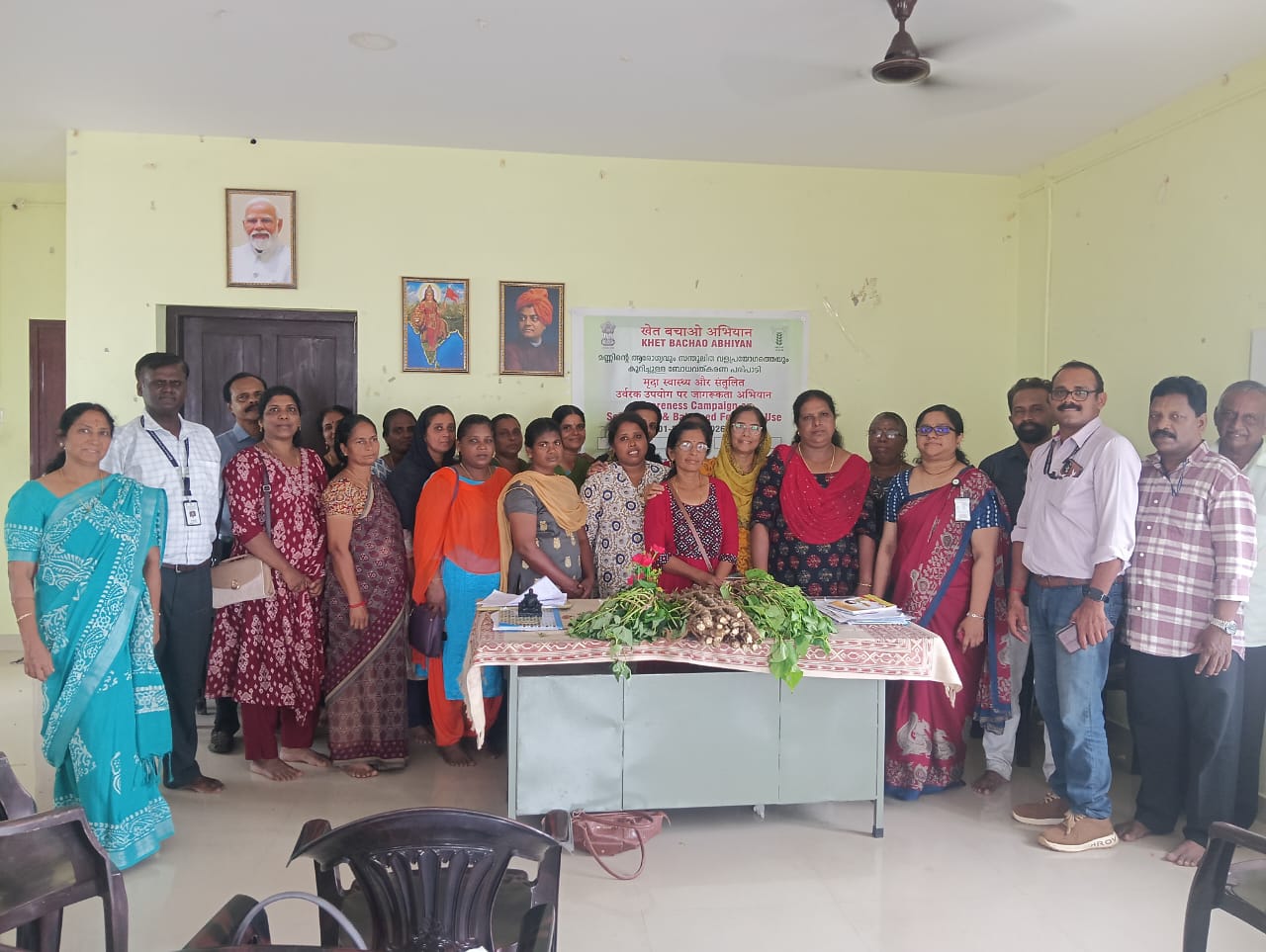
An awareness campaign on “Soil Health Management and Balanced Use of Fertilizers” under the Save the Farm Campaign (Khet Bachaao Abhiyan) was conducted on 12 June 2026 at Thiruvallam Krishi Bhavan, Thiruvallam, Thiruvananthapuram, Kerala.
The programme was jointly organized by ICAR–Central Tuber Crops Research Institute (ICAR-CTCRI), Sreekariyam, Thiruvananthapuram, and the Department of Agriculture Development and Farmers’ Welfare, Government of Kerala, with the objective of disseminating scientifically validated knowledge on sustainable nutrient management practices among farmers and other stakeholders.
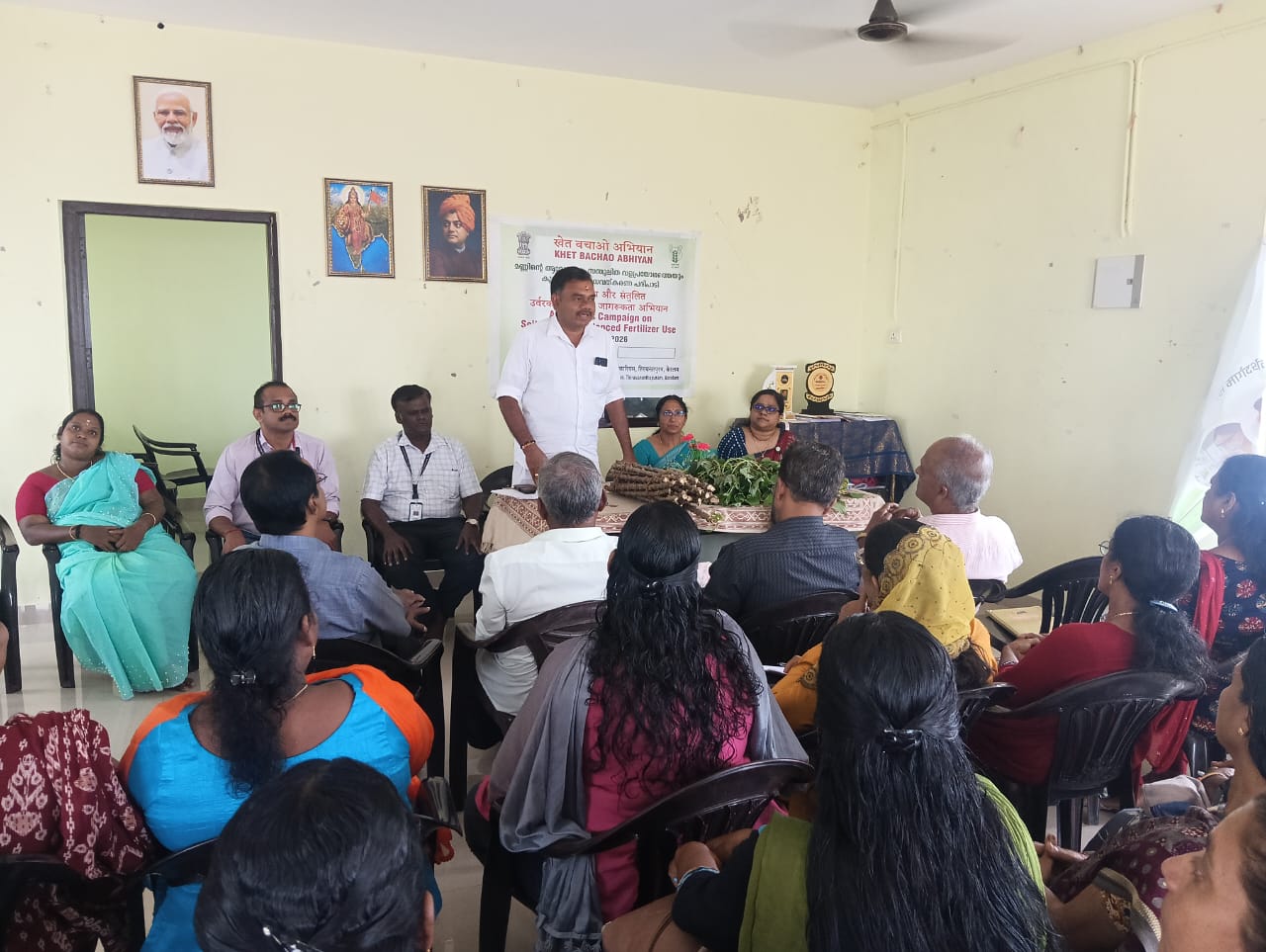
The programme commenced with an inaugural address by Sri P. Gopakumar, Ward Councillor, Thiruvallam Ward, Thiruvananthapuram, who highlighted the importance of soil health management and the balanced use of fertilizers for sustainable agricultural production.
The technical session was led by Dr. R. Muthuraj, Principal Scientist, Division of Crop Production; Dr. Asha K. I., Principal Scientist, Division of Crop Improvement; Dr. N. Krishnaradhika, Senior Scientist, Division of Crop Improvement; Mr. Hareesh B. T., Senior Technician (Farm); Mr. T. M. Shinil, Senior Technician, Division of Crop Protection, ICAR-CTCRI, Sreekariyam; and Mrs. Jisha and Mrs. E. R. Raji, Agriculture Assistants, Thiruvallam Krishi Bhavan, Thiruvananthapuram.
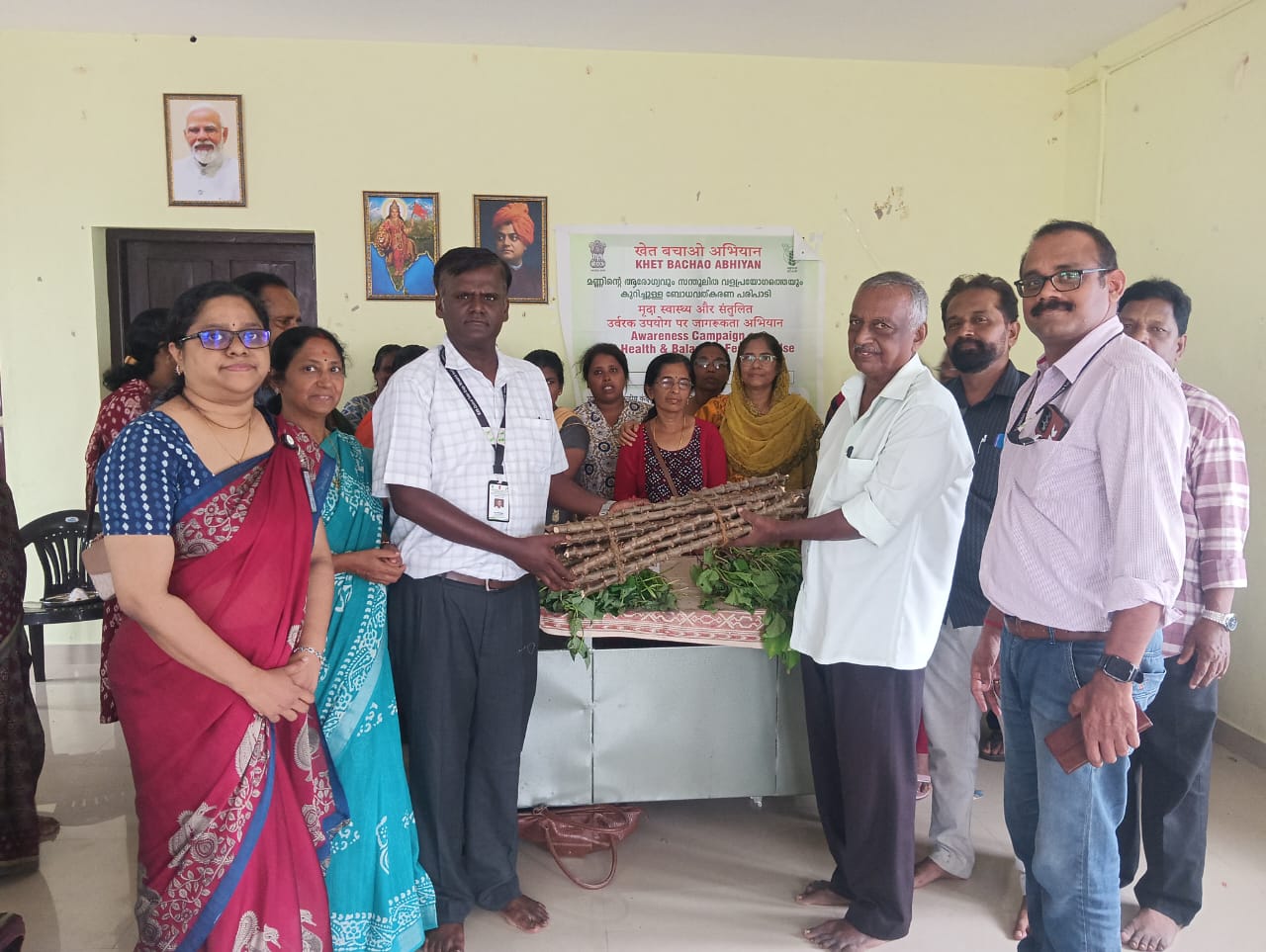
Dr. R. Muthuraj delivered a lecture on soil health management and the balanced use of fertilizers. He explained the framework and objectives of the Save the Farm Campaign (Khet Bachaao Abhiyan) and emphasized the importance of soil test-based nutrient management, integrated nutrient management, soil health card utilization, and strategies for reducing the cost of cultivation. Special emphasis was given to soil health as a critical determinant of crop productivity and sustainability. The session highlighted soil test-based fertilizer recommendations for site-specific nutrient management and discussed organic farming and natural farming approaches for enhancing nutrient use efficiency. Tuber crop-based value addition and service-oriented activities related to farm produce were also presented, highlighting opportunities for enhancing farmers’ income and agricultural sustainability.
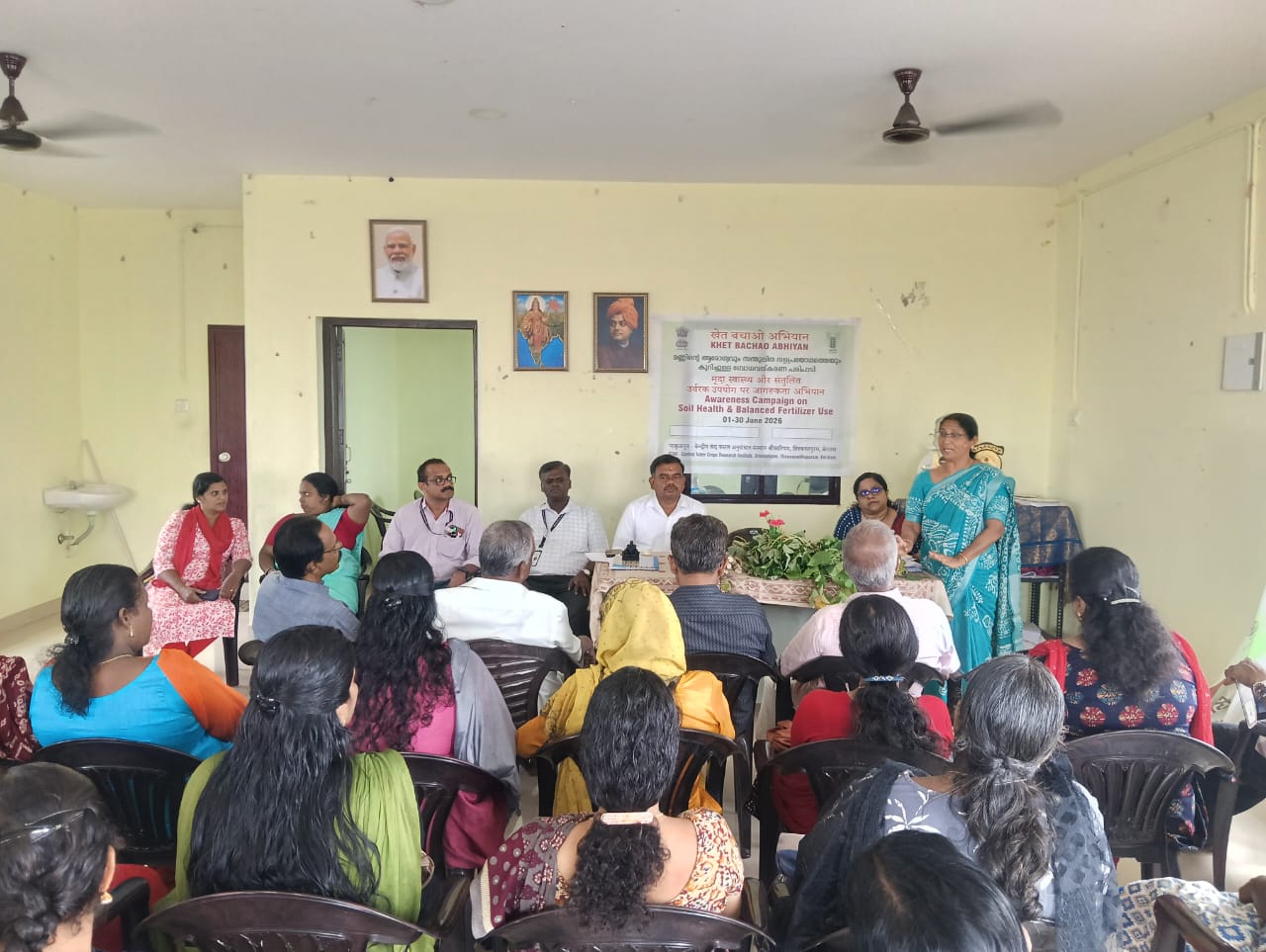
Dr. Asha K. I., Principal Scientist, Division of Crop Improvement, ICAR-CTCRI, explained the framework and objectives of the MGMG programme and highlighted the contributions of ICAR-CTCRI to agricultural research and development. She emphasized soil health as a key factor influencing crop productivity and sustainability and elaborated on the importance of soil test-based fertilizer recommendations. The concept of the 4Rs of nutrient management, the right source, right rate, right time, and right method of fertilizer application was discussed as a scientific approach to optimize nutrient use efficiency.
The prevalence of soil acidity in Kerala’s agro-ecosystems was addressed, along with corrective measures such as liming and integrated nutrient management strategies. The lecture provided a comprehensive analysis of fertilizer use, including case-based evidence on the adverse effects of excessive and imbalanced fertilizer application on soil physicochemical properties and human health. Alternative nutrient sources such as leaf-based manures and neem-coated urea were discussed in detail, highlighting their role in enhancing nutrient availability, minimizing nutrient losses, and improving soil biological activity. The importance of periodic soil testing and adherence to crop-specific package of practices was emphasized for achieving optimum productivity and long-term soil health.
The programme concluded with an interactive discussion session that enabled participants to clarify their doubts and share field-level experiences. Further discussions covered fertilizer application rates, subsidy frameworks, and the necessity for the judicious and evidence-based use of chemical fertilizers in the context of emerging challenges related to soil fertility and environmental sustainability.
Overall, the programme effectively facilitated knowledge transfer on soil health-centred nutrient management and promoted the adoption of integrated, site-specific, and sustainable agricultural practices among the participants. A total of 37 participants, comprising 27 women and 10 men farmers, benefited from the programme. The participants gained valuable insights into how balanced fertilizer use contributes to enhanced soil fertility, improved nutrient use efficiency, increased crop productivity, and sustainable agricultural development.