Image
Image
Image
Image
Event Date
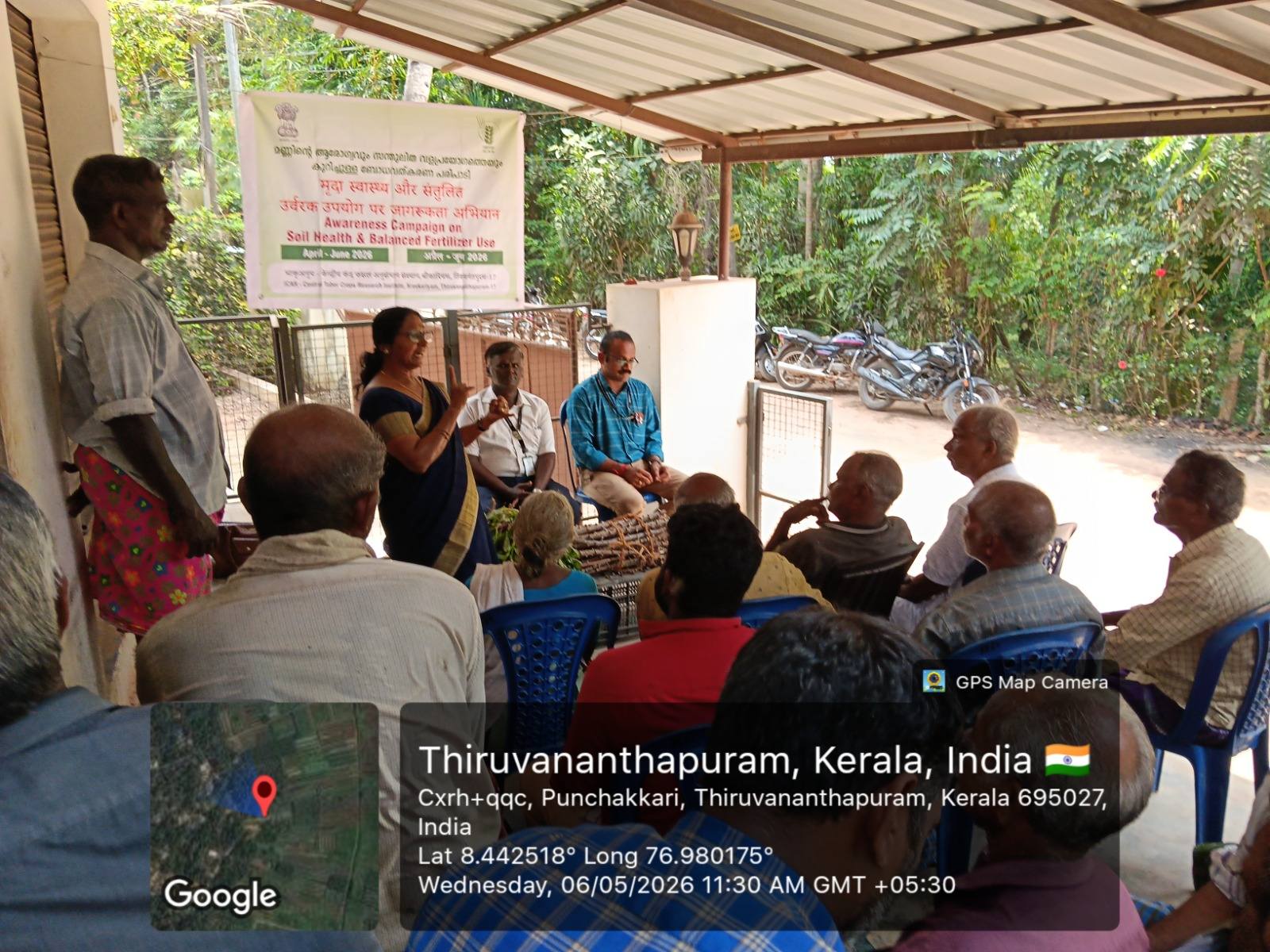
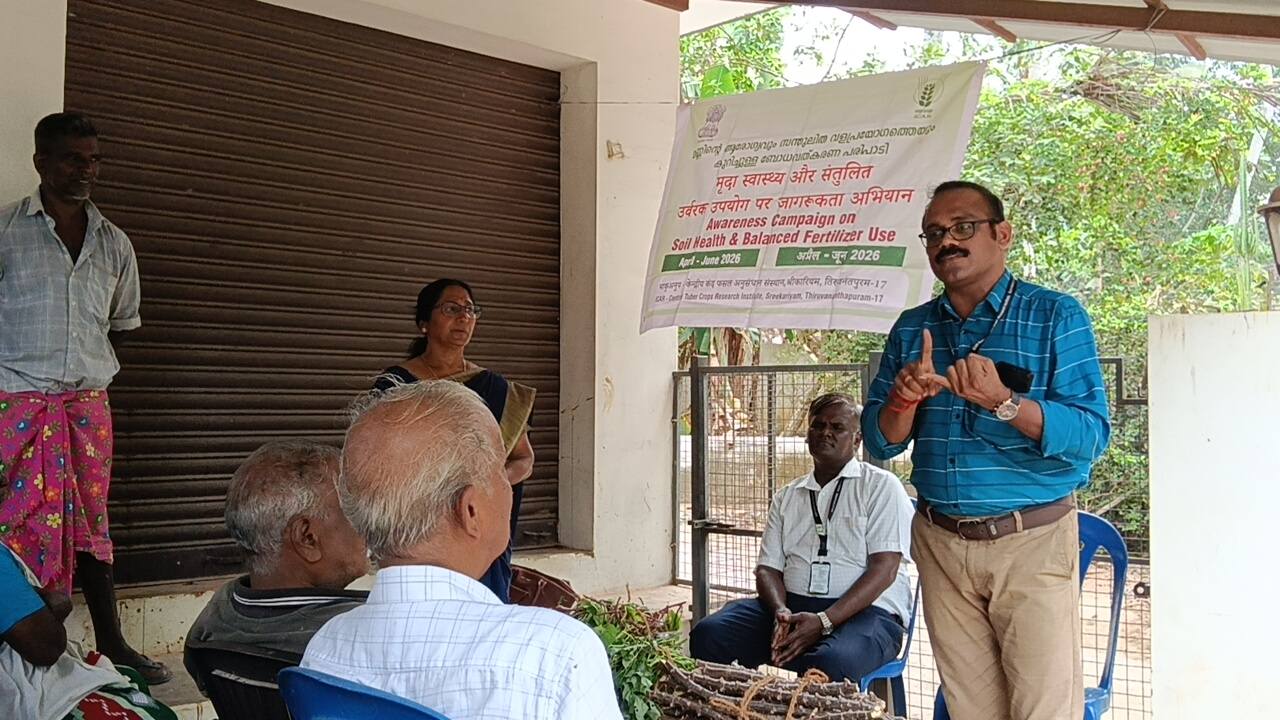
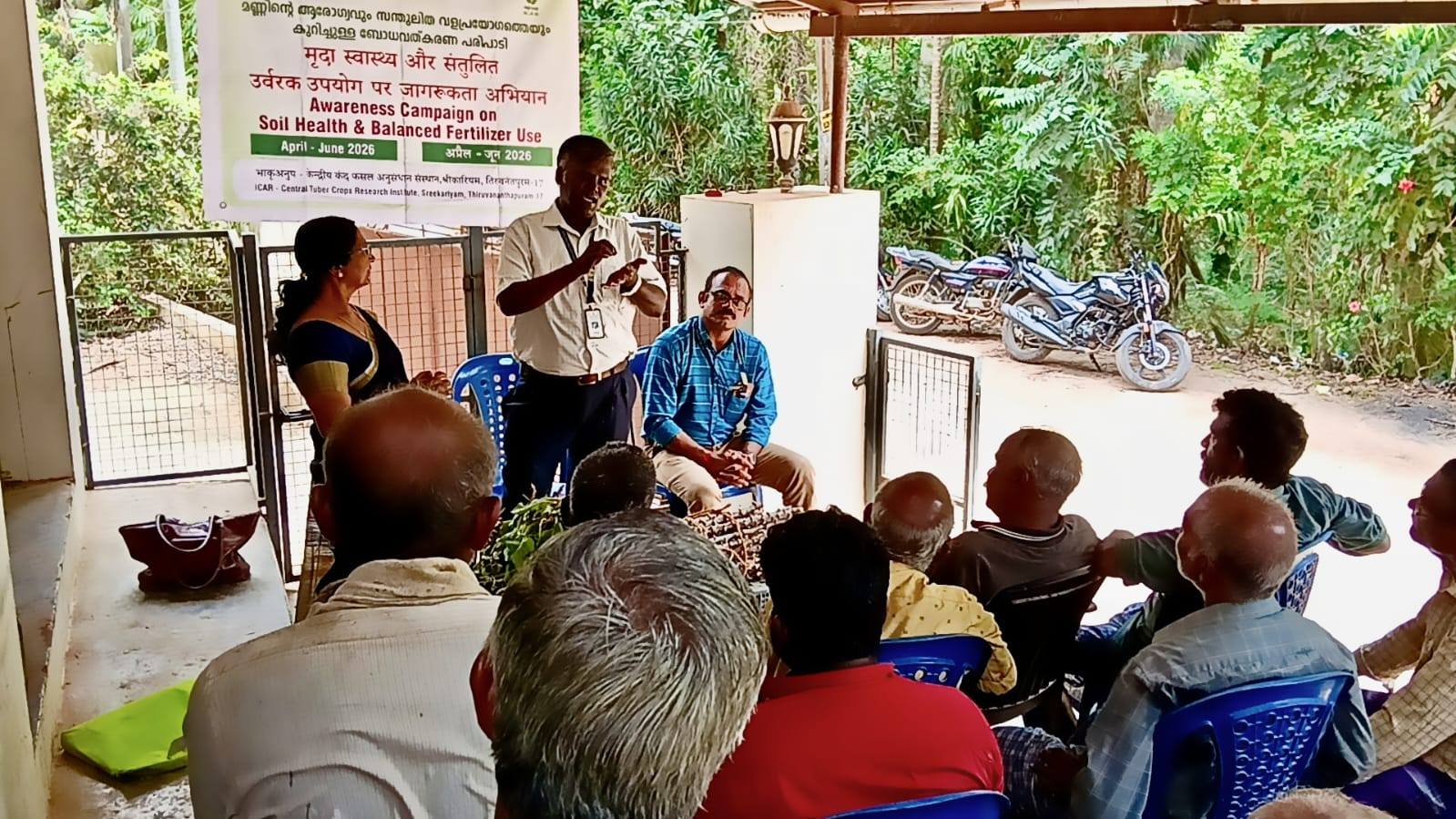
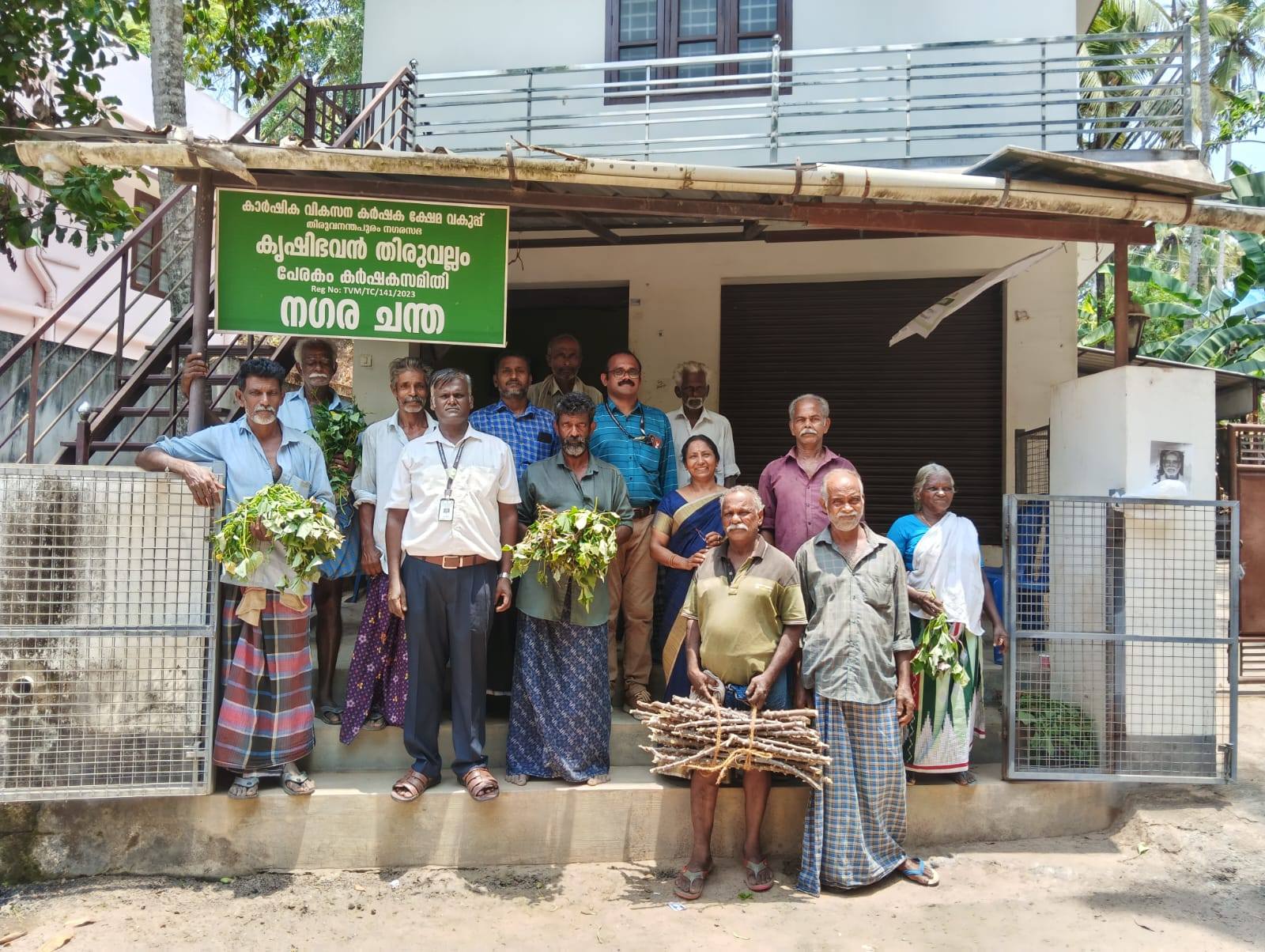
An awareness campaign on ‘Soil Health Management and Balanced Use of Fertilizers’ was conducted on 6 May 2026 at Perakom, Pappanchani, Thiruvallam in association with Perakom Karshaka Koottayma, Thiruvananthapuram, Keralam.
The programme commenced with an inaugural address by Dr. Asha K. I., Team Leader and Principal Scientist, Division of Crop Improvement, ICAR-CTCRI, Sreekariyam. The address outlined the framework and objectives of the programme and highlighted the contributions of ICAR-CTCRI to agricultural research and development. Emphasis was given to soil health as a key factor influencing crop productivity and sustainability, along with the importance of soil test-based fertilizer recommendations for site-specific nutrient management. The concept of the 4Rs of nutrient management-right source, right rate, right time and right method was explained. The issue of soil acidity in Kerala agro-ecosystems and corrective measures such as liming and integrated nutrient management practices were also discussed. Insights into improved crop varieties developed by the institute and their role in enhancing yield, resilience and sustainability under diverse agro-climatic conditions were highlighted.
The technical session was led by Dr. R. Muthuraj, Principal Scientist, Division of Crop Production, ICAR-CTCRI. The session provided a comprehensive overview of fertilizer use, including traditional manures; alternative nutrient sources such as Pseudomonas-based biofertilizers, leaf-based manures and neem-coated urea were discussed in detail with emphasis on their role in improving nutrient availability, reducing losses and enhancing soil biological activity. The importance of regular soil testing and adherence to crop-specific packages of practices for achieving optimal productivity was emphasized.
An interactive session enabled farmers to share field-level experiences and raise concerns. Major issues discussed included lack of reliable markets and limited marketing avenues for crop produce sale. These concerns were addressed with practical suggestions. Methods of soil testing and procedures for obtaining soil health cards were also explained. Additional discussions covered fertilizer application rates, subsidy frameworks and the importance of judicious and evidence-based use of chemical fertilizers in the context of soil fertility management, rising farm input cost and environmental sustainability.
A total of 30 participants, including five women, attended the programme and benefited from the sessions. The programme facilitated effective knowledge transfer on soil health-centered nutrient management and promoted the adoption of integrated, site-specific and sustainable agricultural practices.
The programme concluded with a valedictory address by Hareesh B. T., Senior Technician (Farm), ICAR-CTCRI. Case studies of farmer groups involved in value addition and service-oriented activities related to farm produce were presented, highlighting opportunities for enhancing income and sustainability in agriculture.