National Farmers Day ‘Kisan Diwas’ 2025 at ICAR-CTCRI
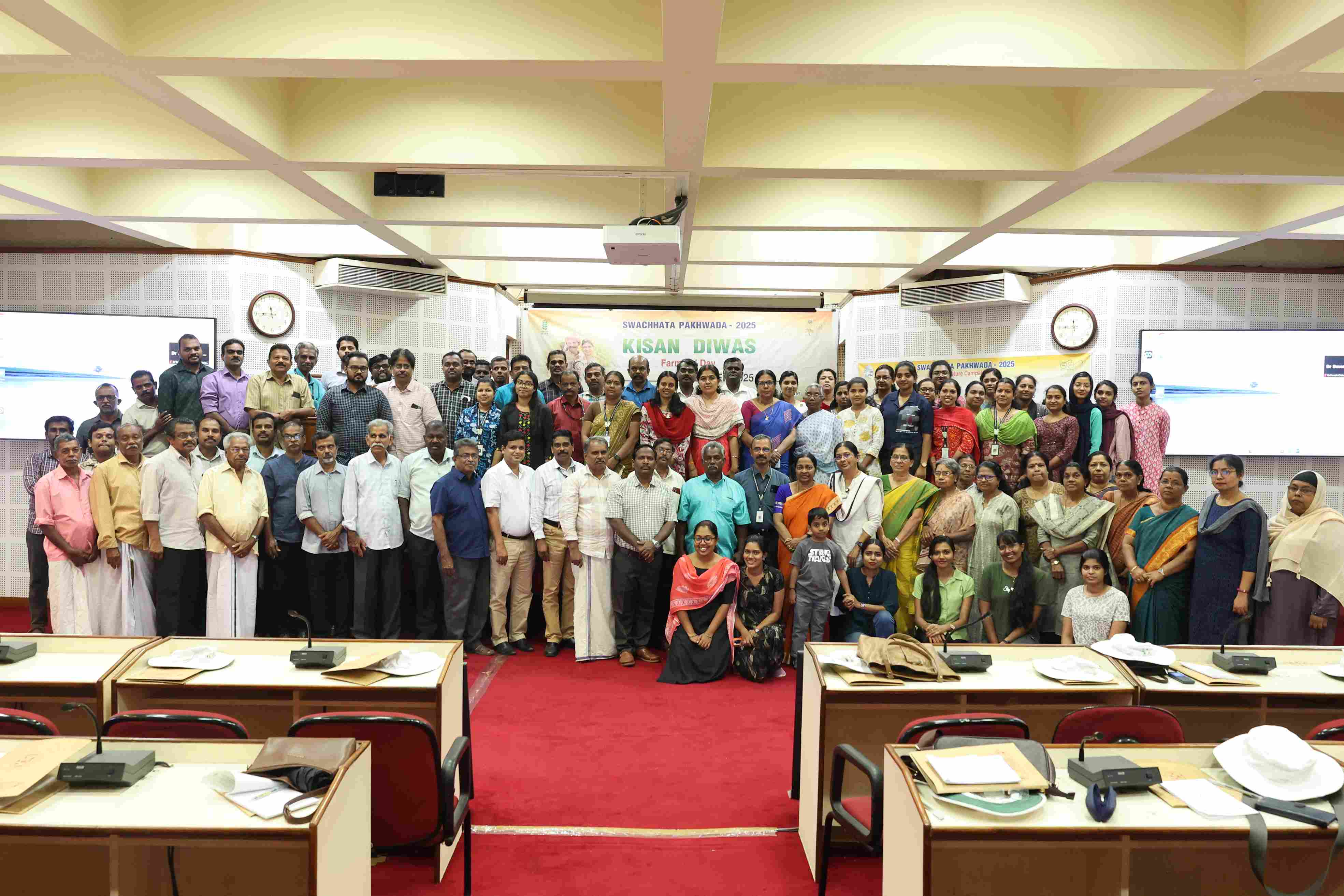
The ICAR-Central Tuber Crops Research Institute (ICAR-CTCRI), Thiruvananthapuram, organized National Farmers Day ‘Kisan Diwas 2025’ along with a Scientist-Farmer Interface on Improved Technologies of Tuber Crops on 23 December 2025 at the Millennium Hall of the Institute. The event witnessed active participation from over 270 attendees, including farmers from Thiruvananthapuram district of Kerala, as well as staff members of the Institute.
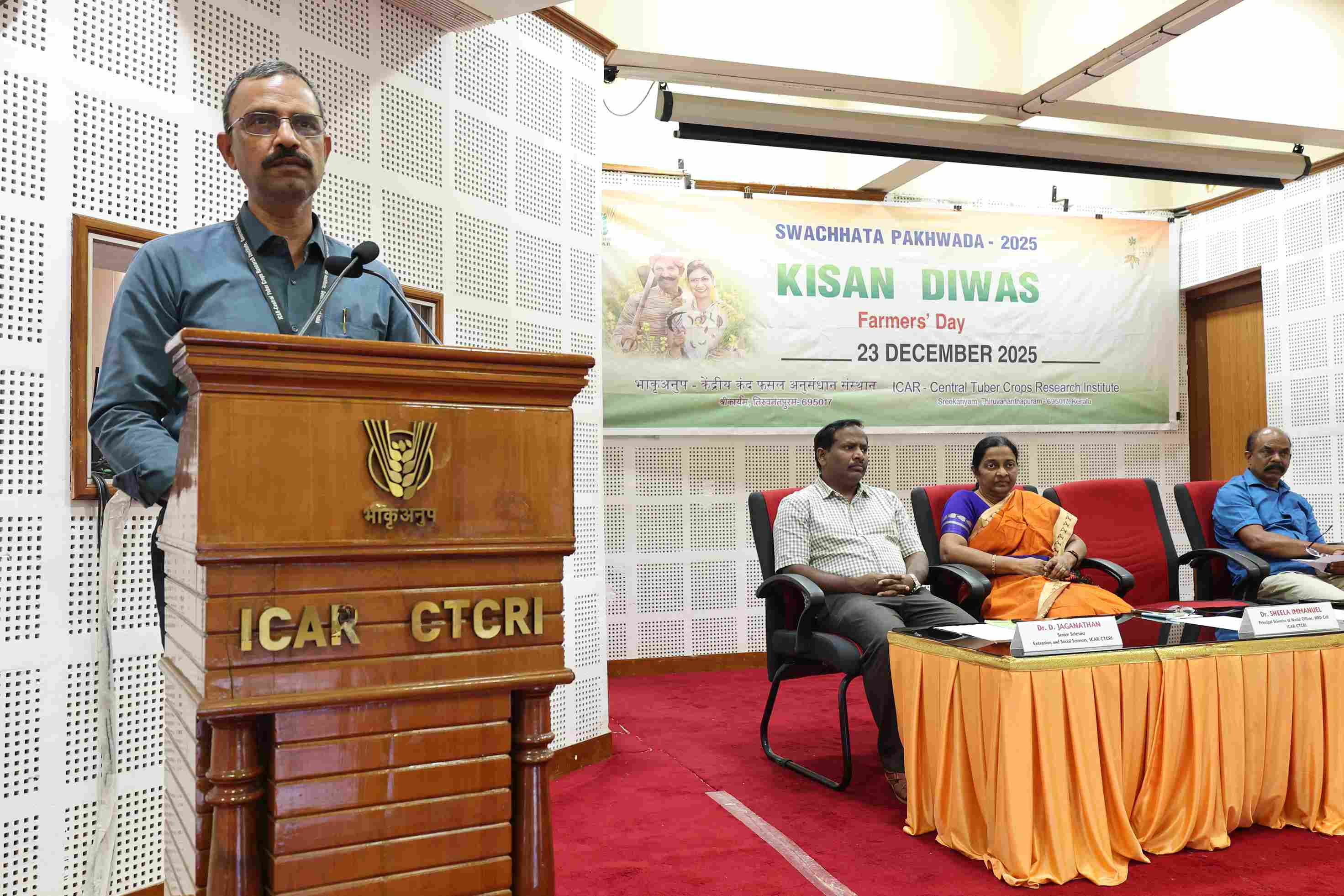
Dr. T. Makeshkumar, Director (i/c), ICAR-CTCRI, delivered the Presidential Address, highlighting the importance of farmers’ day on the birth anniversary of former Prime Minster of India Shri. Choudhary Charan Singh. He stressed about the provisions of new bill ‘VB G RAM G Bill 2025’for the development of agriculture and rural areas in India. He also emphasized the contributions of ICAR-CTCRI for nation building by way of development of improved tuber crops varieties and technologies for enhancing farm income and livelihood of farmers in our country.
The programme began with the welcome address by Dr. D. Jaganathan, Senior Scientist and special remarks by Dr. Sheela Immanuel, Principal Scientist. The inaugural event concluded with the vote of thanks by Dr. C. Mohan, Principal Scientist. The scientist-farmer interface session on improved technologies of tuber crops and various central government schemes related to agriculture was also conducted as part of the celebrations.
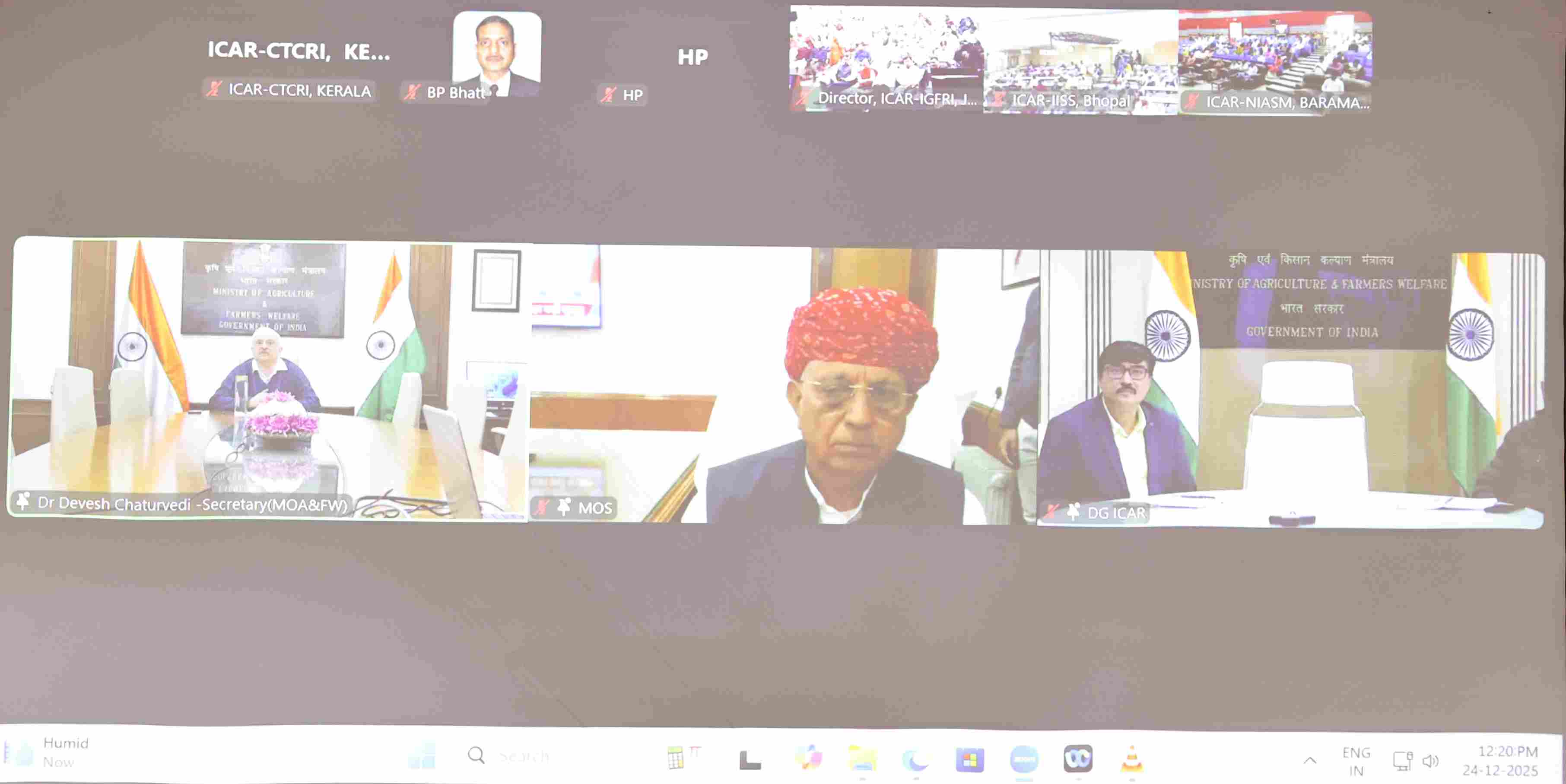
Following the inauguration, participants viewed the live telecast of Shri. Bhagirath Choudhary, Hon’ble Union Minister of State for Agriculture and Farmers Welfare. The Minister stressed the contributions of farmers and new schemes/programmes for development of agriculture in our country. He also emphasized the provisions of the new bill ‘The Viksit Bharat Guarantee for Rozgar and Ajeevika Mission (Gramin) (VB G RAM G) Bill, 2025 which was introduced and passed in Parliament recently.
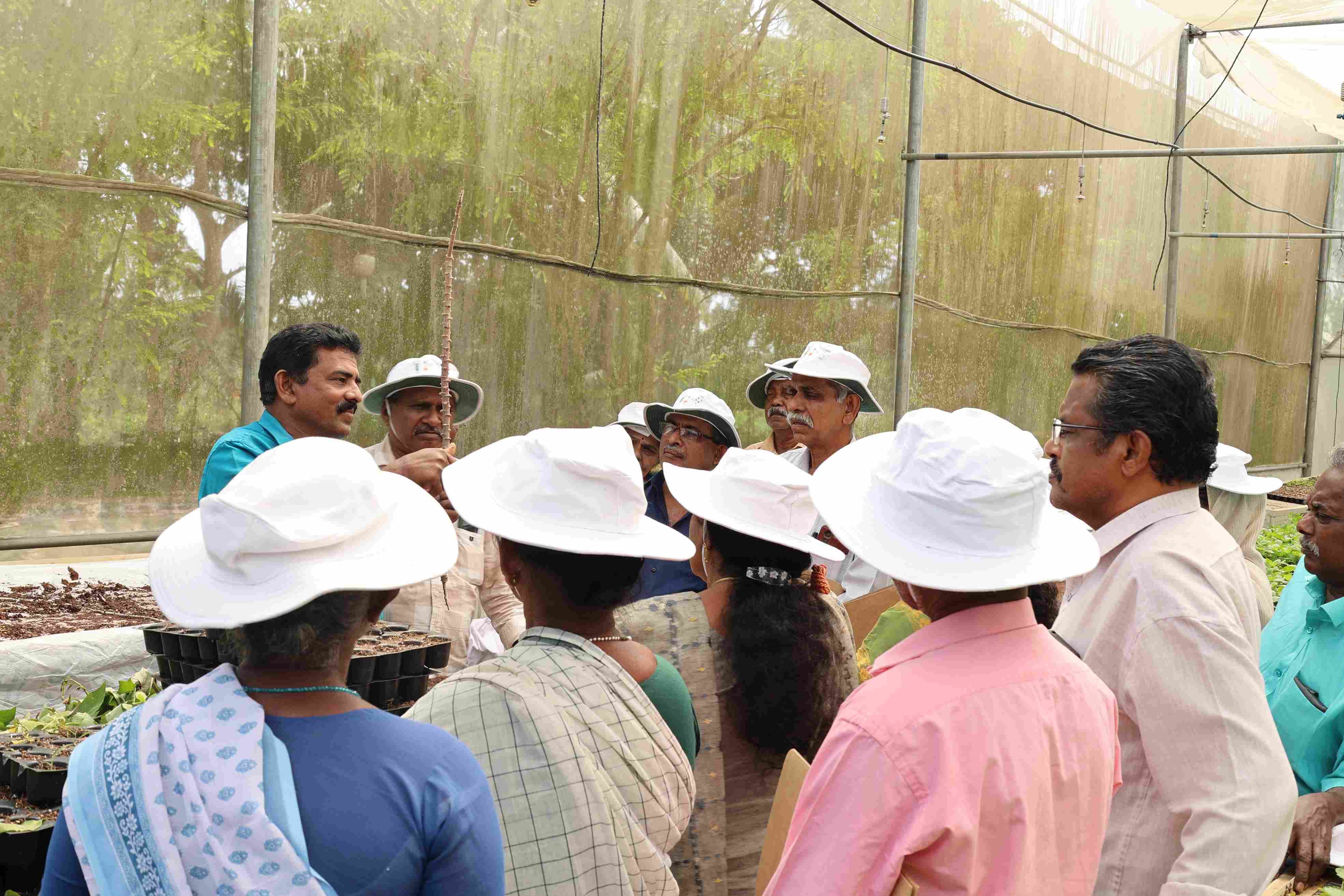
As part of the programme, participants visited the key facilities of the Institute, including the crop museum, biopesticides laboratory, dairy unit, natural and organic farming experimental plots, and the RootSmart facility. Training materials were distributed to support knowledge dissemination. Overall, the event served as a valuable platform for promoting scientific awareness, sharing information on government schemes, and fostering strong farmer-scientist interactions to encourage sustainable agricultural practices in tuber crops-based farming systems